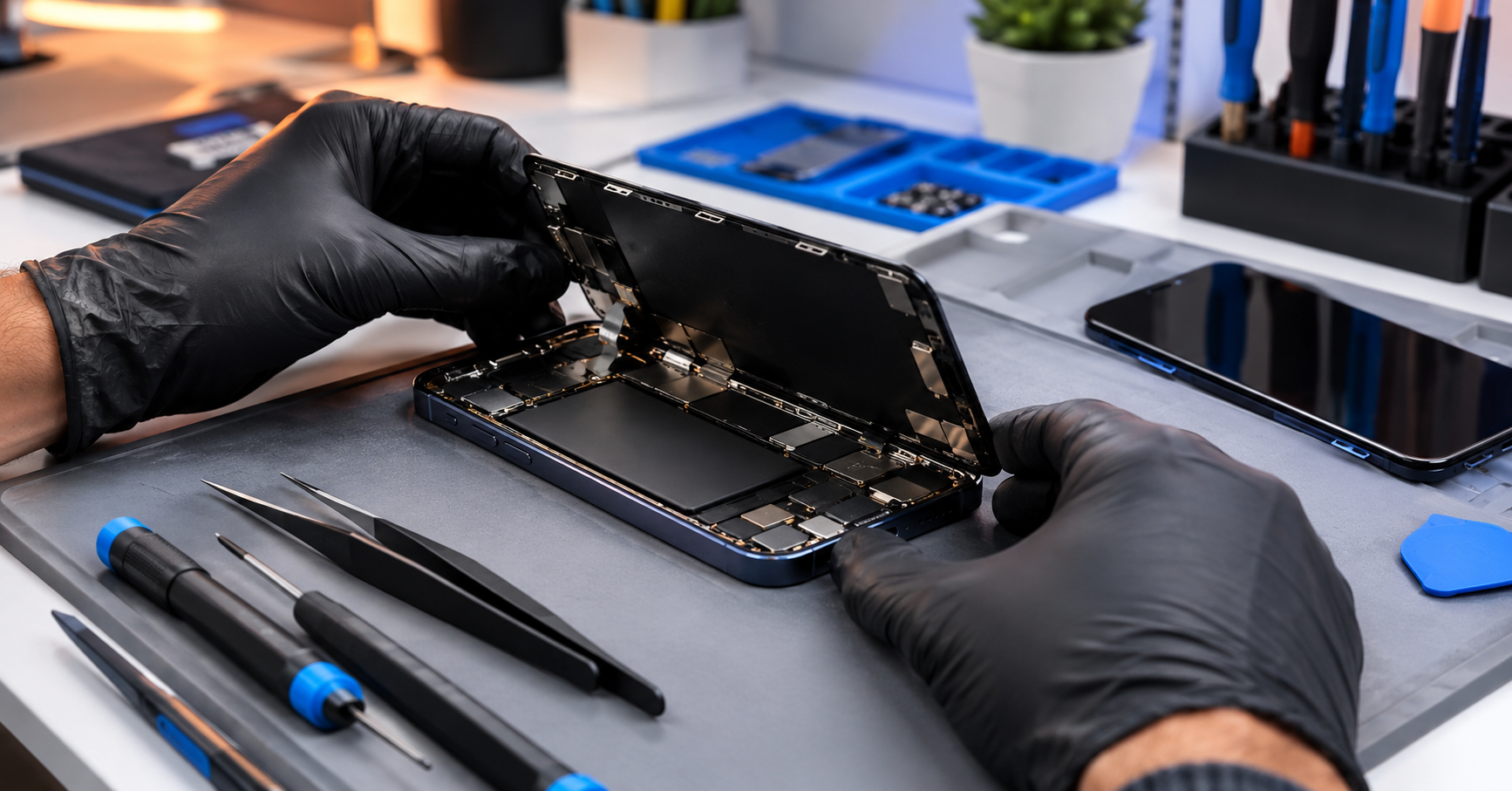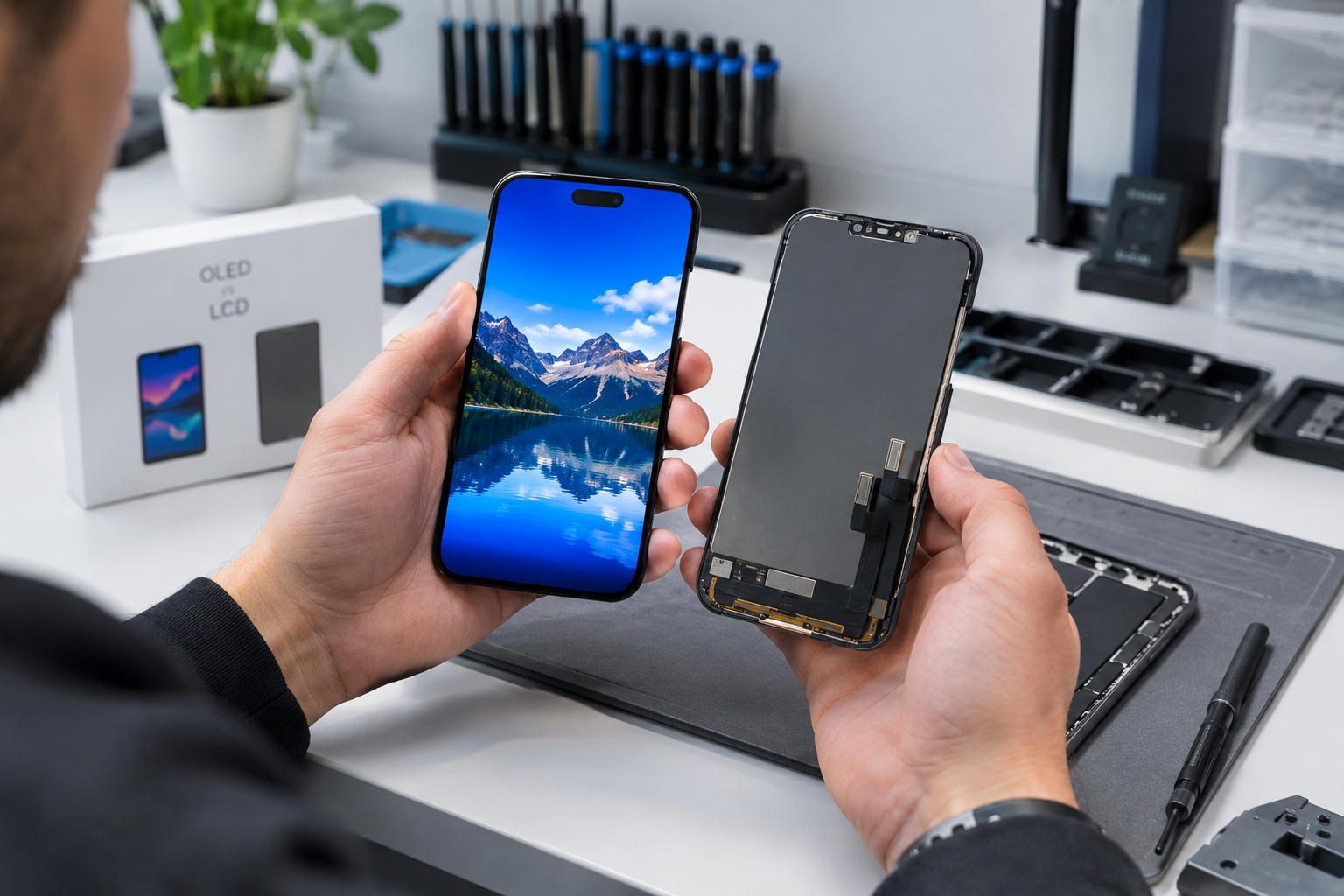
In a smartphone repair workshop in Tunisia, the question of screen replacement pricing comes up multiple times a day. Between an economy quote and a premium or original-grade display, customers often want to know why market rates vary so much. For a technician, knowing how to clearly explain the technical differences between OLED, Incell, and TFT technologies is not just a sales argument—it is the key to building trust and protecting workshop margins.
Understanding Screen Technologies to Better Advise Customers
The choice of spare parts ordered from suppliers directly affects the visual output, power consumption, and durability of the repair. Each technology has specific physical characteristics that repair shops need to master.
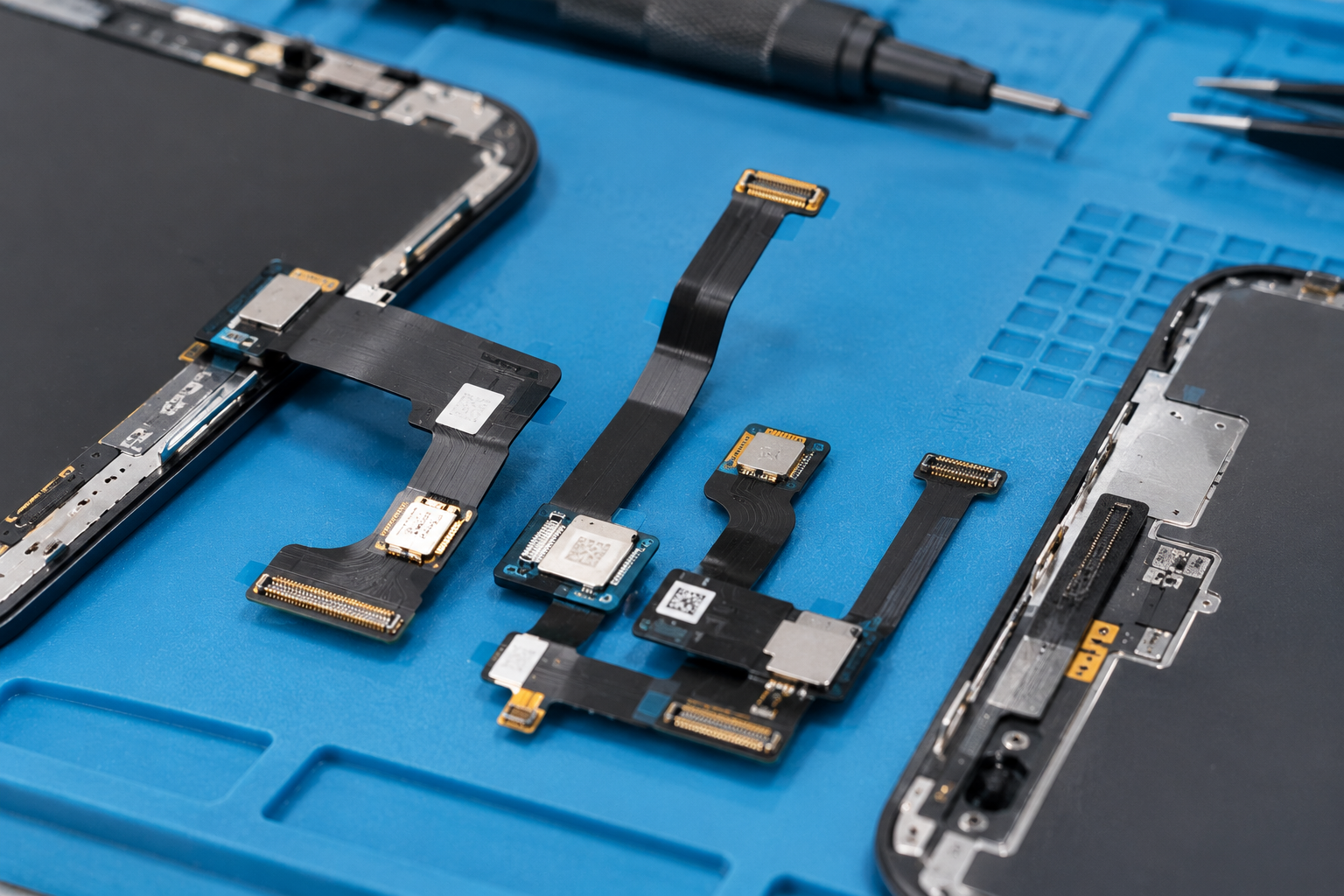
OLED Displays: The Choice for Excellence and Visual Comfort
OLED (or AMOLED on certain models) is the standard technology for most high-end and recent mid-range smartphones (recent iPhones, Samsung Galaxy S series or advanced A series). Individual pixels light up independently, delivering perfect blacks, infinite contrast, and excellent color accuracy.
For the user, this ensures the phone's original visual experience is fully restored. Furthermore, the thinness of the panel preserves initial touch responsiveness and allows under-display fingerprint sensors to work seamlessly. It is the ideal option for demanding customers who want zero compromises.
Incell and TFT Technologies: Budget-Friendly Alternatives
Given the cost of original OLED panels, third-party manufacturers offer LCD alternatives, notably Incell and TFT screens, which are in high demand for mid-range and entry-level repairs.
- Incell: This technique integrates the touch layer directly inside the LCD matrix. It offers good thinness, satisfactory brightness, and reliable touch behavior at a significantly lower cost than OLED.
- Standard TFT: Thicker and more power-hungry, standard TFT panels sometimes feature slightly wider borders or less deep blacks. They are ideal for budget-conscious clients looking for an economical fix to revive an older device or manage costs on a secondary phone.
Building Your Sales Pitch at the Counter
Quoting a price at the counter without explaining the origin of the part often leads to misunderstandings. When a customer is surprised by the cost of an OLED screen compared to a compatible option, structuring the conversation around two key points makes all the difference.
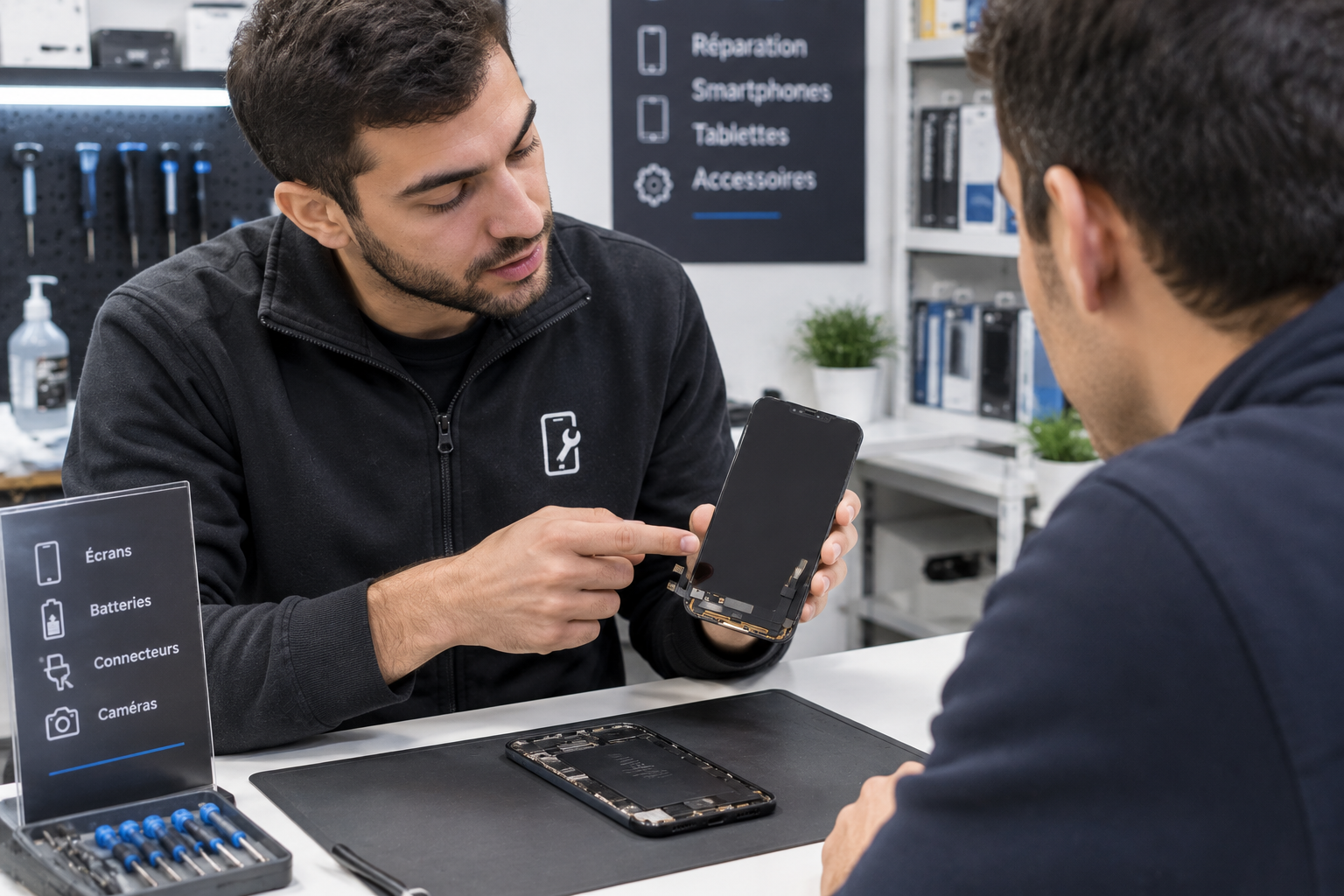
1. Highlighting Daily Usability and Comfort
Explain to the customer that the screen is the component they interact with 100% of the time. An OLED screen preserves battery life thanks to efficient black pixel management and guarantees vibrant outdoor readability. Conversely, Incell or TFT options represent a smart budget compromise if funds are tight while still ensuring full core functionality.
2. Clarifying Power Consumption and Thickness
On certain models, a thicker LCD panel can slightly alter chassis fit or consume marginally more power. Informing the customer beforehand prevents any disappointment after device handover. Transparency is vital for building customer loyalty across Tunis, Sfax, Sousse, and other regions.
Selecting and Ordering the Right Parts on Tunispare
To ensure customer satisfaction and minimize warranty returns, choosing the right spare parts supplier is critical. On Tunispare, repair workshops can access a broad catalog of components rigorously categorized by compatibility and quality tier.
Whether you need a refurbished original OLED screen or a high-value Incell alternative, planning your orders with detailed product sheets allows you to adjust quotes with confidence. To further optimize your workshop management, check out our guide on iPhone unknown part messages after repair.
By adopting transparent communication regarding screen technologies, you turn a technical constraint into an opportunity to highlight your expertise as a professional technician. Order your screens and components on Tunispare to equip your workshop at the right price and meet every customer's expectation.